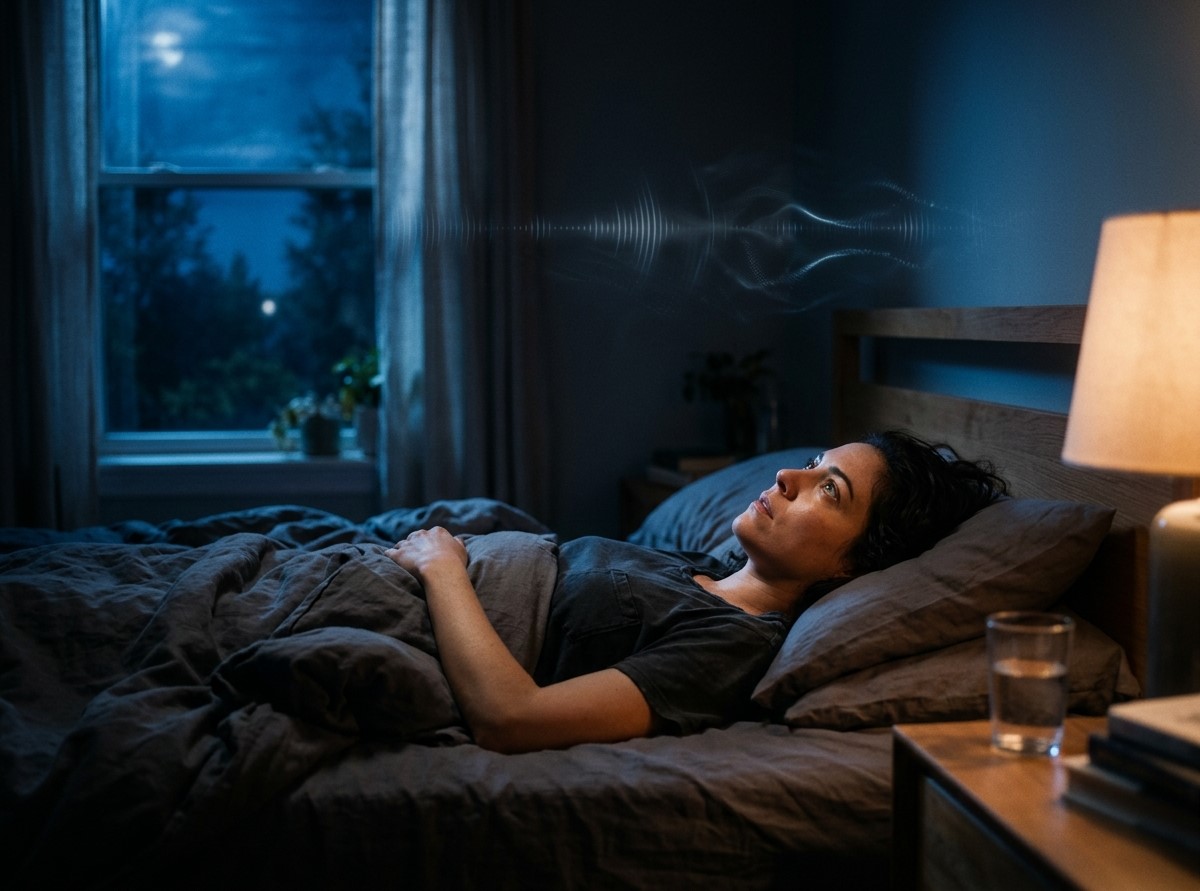
If you’ve already read about the real reason tinnitus won’t go away, you know that tinnitus isn’t a simple ear problem — it’s a complex neurological response that the brain generates when something in the auditory pathway changes. But knowing the cause doesn’t always answer the most practical question people have: why does the ringing feel so much louder and more unbearable at night, and what can you actually do about it right now?
This article goes deeper on the nighttime dimension of tinnitus — one of the most searched aspects of the condition in the US, UK, Canada, and Australia — and lays out what the evidence says about managing it effectively.
The Silence Problem
During the day, your brain is constantly processing sounds — traffic, conversation, office noise, music, notifications. All of that external sound acts as a natural mask for the internal ringing of tinnitus. You’re not curing it during the day; you’re simply giving your brain enough competing input that it deprioritizes the tinnitus signal.
At night, that all changes. The room goes quiet, the distractions disappear, and suddenly the ringing that was background noise all day becomes the loudest thing in the room. Researchers refer to this as the signal-to-noise ratio problem: tinnitus doesn’t actually get louder at night in most cases — the absence of competing sound just makes it relatively more prominent.
This is important because it means solutions that address the silence — rather than trying to suppress the tinnitus itself — often work better than people expect.
Stress and the Nighttime Loop
There’s a second factor that makes nighttime tinnitus so particularly brutal: the stress-tinnitus feedback loop. Here’s how it works.
You lie down. The ringing becomes noticeable. You feel anxious about it. That anxiety activates your nervous system’s stress response, which increases neural activity in the auditory cortex — which makes the tinnitus louder. The louder it gets, the more anxious you feel. The more anxious you feel, the louder it gets.
This loop is well-documented in tinnitus research and is one of the core reasons why psychological approaches like Cognitive Behavioral Therapy (CBT) show up consistently in clinical guidelines. The goal of CBT for tinnitus isn’t to eliminate the sound — it’s to interrupt the emotional response to it, which breaks the feedback loop and allows the brain to gradually deprioritize the signal over time.
If your tinnitus feels like it has gotten dramatically worse over weeks or months of poor sleep, there’s a reasonable chance this loop is a significant part of what’s driving it.
Sleep Deprivation Makes Everything Worse
The relationship between tinnitus and sleep runs in both directions. Tinnitus disrupts sleep, and poor sleep makes tinnitus worse. Studies have found that sleep deprivation increases the perceived loudness and intrusiveness of tinnitus — likely because a fatigued brain has less capacity to suppress irrelevant signals, including the phantom noise generated by the auditory cortex.
This is why addressing sleep quality is considered a meaningful part of tinnitus management even though sleep itself doesn’t treat the underlying condition. Practical steps that consistently come up in clinical recommendations include:
- Keeping a consistent sleep schedule — irregular sleep patterns appear to worsen tinnitus severity across multiple studies
- Lowering bedroom temperature — there’s some evidence that cooler sleeping environments reduce nighttime arousal, which helps break the anxiety loop
- Avoiding alcohol before bed — alcohol disrupts sleep architecture and is a commonly overlooked tinnitus trigger, particularly for nighttime flare-ups
- Reducing screen exposure in the hour before bed — not because of blue light specifically, but because stimulating content raises cognitive arousal at a time when you need the opposite
Sound Therapy at Night: What Actually Works
The most evidence-backed practical tool for nighttime tinnitus is sound therapy — and it doesn’t have to be complicated or expensive. The basic principle is straightforward: give your brain something neutral to process so the tinnitus signal has competition.
What works best varies by person, but the options with the most clinical backing include:
White noise machines or apps — broad-spectrum noise that masks the tinnitus frequency without being stimulating. Studies suggest that matching the frequency of the masking sound to the approximate pitch of your tinnitus gives better results than generic white noise.
Pink noise — some people find pink noise (which has more energy in lower frequencies than white noise) more soothing and easier to sleep through, particularly for lower-pitched tinnitus.
Nature sounds — rain, ocean waves, and forest ambience consistently show up as preferred by tinnitus patients in self-reported studies, possibly because they have natural variation that prevents the brain from habituating to and then “ignoring” the masking sound.
Notched music therapy — an emerging approach where music is filtered to remove the frequency corresponding to your tinnitus pitch, with some early evidence suggesting it may reduce tinnitus loudness over time through neuroplastic changes in the auditory cortex.
None of these eliminate tinnitus. But they meaningfully change the conditions under which your brain processes it — which for most people translates to real, noticeable relief at night.
The Supplement Question
Inevitably, people searching for nighttime tinnitus relief land on supplement products — there are dozens of them marketed specifically toward tinnitus, usually with ingredients like ginkgo biloba, magnesium, zinc, melatonin, or various B vitamins.
The honest summary of the evidence here: some of these ingredients have theoretical mechanisms that could be relevant to tinnitus (magnesium, for instance, has a known role in protecting cochlear hair cells from noise damage, and melatonin has shown modest benefits for tinnitus-related sleep disruption in a few small trials). But the clinical evidence for any specific supplement product curing or significantly reversing tinnitus is thin to nonexistent.
What the research does suggest is that correcting genuine nutritional deficiencies — particularly in magnesium, zinc, and B12, which are more common than people realize — may modestly reduce tinnitus severity in people who were deficient to begin with. This is very different from the claim that taking a supplement will “repair” damaged hearing or reverse neurological tinnitus.
If you’re considering a tinnitus-focused supplement, the most important things to look for are transparency about ingredients and dosages, and whether the company makes any claims that go beyond what the ingredient evidence actually supports.
For those who want to explore supportive options alongside evidence-based approaches like sound therapy and sleep management, this tool has been getting attention in the tinnitus community — do your own research and read the ingredients before purchasing anything.
When to See a Doctor
Most tinnitus is chronic and benign — frustrating, but not a sign of something dangerous. However, there are specific circumstances where tinnitus warrants prompt medical evaluation:
- Sudden onset tinnitus, especially if it appeared within the last 48–72 hours — sudden sensorineural hearing loss sometimes accompanies sudden tinnitus and responds much better to treatment when caught early
- One-sided tinnitus that doesn’t have an obvious cause (like a loud concert) — unilateral tinnitus can occasionally be associated with acoustic neuroma or other conditions that benefit from imaging
- Pulsatile tinnitus — a rhythmic beat that syncs with your heartbeat — which can sometimes indicate vascular issues
- Tinnitus accompanied by dizziness, vertigo, or sudden hearing loss — this combination can indicate Meniere’s disease or vestibular issues that have specific treatment pathways
If none of these apply to you and your tinnitus is the familiar chronic ringing that gets particularly bad at night, you’re likely in the category where management — rather than cure — is the realistic and achievable goal.
Putting It Together
Nighttime tinnitus is one of the most disruptive aspects of a condition that’s already hard to live with — but it’s also one of the dimensions that responds best to practical, non-pharmaceutical interventions. Sound therapy, sleep hygiene, stress management, and cognitive approaches all have real evidence behind them, and many people see significant improvement in how much tinnitus affects their nightly life within weeks of applying them consistently.
For the full picture on why tinnitus happens in the first place and what the neuroscience actually says, read our main piece: The Real Reason Tinnitus Won’t Go Away — What Research Actually Shows.
This article is for informational purposes only and does not constitute medical advice. If your tinnitus is sudden, one-sided, or accompanied by other symptoms, please consult an audiologist or ENT physician.


