You’ve probably read a hundred horoscopes in your life. Maybe you know your rising sign, your moon sign, even your Chinese zodiac animal. But there’s a good chance you’ve never heard of the one system that’s arguably more personal than all of them combined: your Birth Card.
If you landed here after reading about how Mercury retrograde affects every Birth Card differently, you already know this concept exists. This guide goes deeper — what a Birth Card actually is, where the system comes from, how it’s calculated, and why so many people say it feels more accurate than a standard zodiac reading.
What Exactly Is a Birth Card?
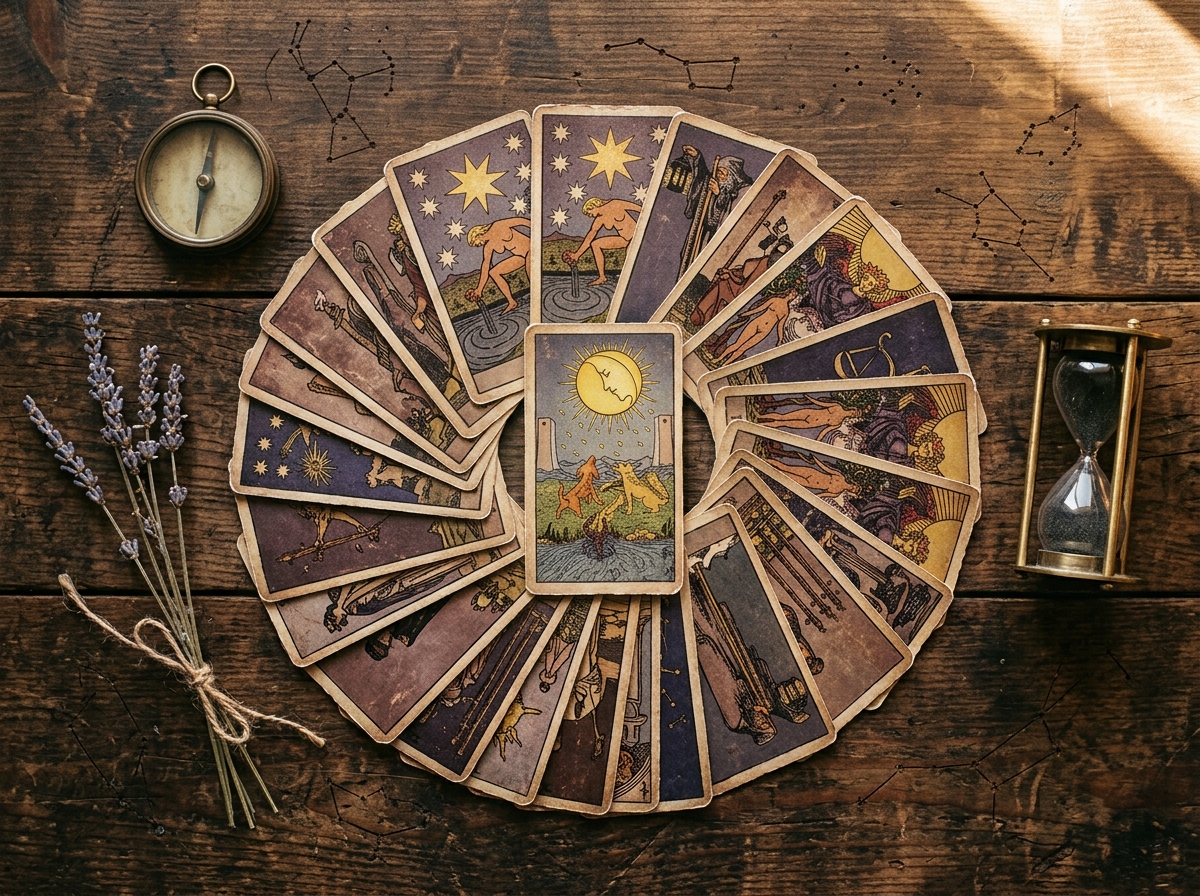
A Birth Card is a single playing card — drawn from the same 52-card structure that tarot’s “minor arcana” is built on — that’s mathematically linked to your exact date of birth. Where your zodiac sign is shared with roughly 1/12th of the population (anyone born in a several-week window), your Birth Card system narrows things down much further, since it’s calculated from your full birth date rather than just the month and day.
The idea is simple: the day you were born isn’t random. According to this framework, it corresponds to a specific archetype — a card that’s said to carry information about your natural personality, the lessons you tend to repeat throughout life, and how you typically respond to disruption, change, and uncertainty.
This is different from a daily tarot pull, where you shuffle a deck and draw a random card for guidance on that specific day. A Birth Card doesn’t change. It’s fixed to your birth date the same way your zodiac sign is — except it draws from a 52-card system instead of a 12-sign one, so it tends to feel more specific to the individual.
Where Does the Birth Card System Come From?
The practice of linking birth dates to cards comes from cartomancy, a divination tradition that predates a lot of modern astrology apps by centuries. Cartomancers developed calendar systems that map every day of the year to a corresponding card, adjusting for how the calendar cycles and repeats.
It’s a niche enough practice that most people have never encountered it — which is part of why it feels so fresh compared to the horoscope content that’s been recycled online for years. You’ve seen a thousand “Libra season” posts. You probably haven’t seen many built around your specific Birth Card.
How Is a Birth Card Calculated?
Traditionally, working out your Birth Card involved cross-referencing your birth date against a perpetual card calendar, then applying an adjustment based on leap years and how far the current cycle has progressed. It’s not overly complicated, but it does take a reference chart and a few careful steps to get right — the kind of calculation a cartomancer would have once done by hand.
The modern version of this is a lot simpler. Instead of manually working through a reference chart, you can now get your Birth Card instantly by entering your date of birth into an interactive calculator that does the math for you and returns a full reading — including your card, its meaning, and how it tends to show up in real situations.
The Abundance Arcana offers exactly this kind of tool. You enter your birth date, and it identifies your card along with a personalized breakdown of your natural tendencies and blind spots.
👉 Calculate your Birth Card here →
Birth Card vs. Zodiac Sign: What’s the Actual Difference?
People often assume a Birth Card is “just another word for zodiac sign,” but the two systems work differently:
| Zodiac Sign | Birth Card | |
|---|---|---|
| Based on | Month/day range (~30 days) | Exact date of birth |
| Shared with | ~1/12th of the population | A smaller, more specific group |
| Origin | Western astrology | Cartomancy / card divination |
| Focuses on | Broad personality traits, monthly transits | Individual patterns, life themes, personal blind spots |
Neither system is “more correct” than the other — they’re different lenses. But a lot of people find that because the Birth Card system narrows things down further, the descriptions read as noticeably more specific to their actual life than a Sun-sign horoscope written for millions of people at once.
Why This Matters More Than Ever Right Now
Right now, a lot of people are dealing with a stretch of miscommunication, tech glitches, and delayed plans — the hallmark signs of a Mercury retrograde cycle. Generic horoscope content tells everyone the same thing: be careful with contracts, expect delays, don’t send that text you’re overthinking.
But as covered in the companion piece, Your Birth Card Reveals What Mercury Retrograde Won’t Tell You, the way a retrograde period actually shows up in your life depends heavily on your specific Birth Card. Two people can experience the exact same planetary weather completely differently — one might feel it in their communication patterns, another in a resurfacing relationship, another in second-guessing a big decision.
Knowing your Birth Card gives you a more precise lens for understanding your version of “everyone’s having a rough Mercury retrograde” — instead of a one-size-fits-all warning that may not even apply to your situation.
What People Typically Notice After Getting Their Reading
The most common reaction isn’t disbelief or “wow, magic.” It’s recognition. People read a description tied to their exact birth date and start noticing how closely it lines up with patterns they’ve quietly lived with for years: a tendency to take on too much, a recurring theme in relationships, a habit of overthinking communication during stressful periods.
That’s the actual value here — not fortune-telling, but a framework that gives language to patterns you may have already sensed but never had a name for.
Is This Actually Legitimate — or Just Entertainment?
Worth being upfront about this: a Birth Card reading is a self-reflection and entertainment tool, not a scientific or medical instrument. It can’t diagnose a health condition, promise a specific financial outcome, or guarantee how a relationship will unfold — and any tool in this space that promises those things should be treated with real skepticism.
What it can offer is a structured, personalized way to reflect on your own patterns — one built around your specific birth date rather than a generic monthly horoscope written for an entire zodiac sign.
How to Find Your Own Birth Card
If you’re curious what your card actually is, the process takes about two minutes:
- Have your exact date of birth ready
- Enter it into the Birth Card calculator
- Get your personalized reading, including your card, its core traits, and how it tends to respond during high-disruption periods like the current Mercury retrograde
👉 Get your free Birth Card reading here →
Once you know your card, it’s worth revisiting the Mercury retrograde breakdown to see exactly how your specific card tends to respond during this kind of astrological weather — because the generic advice everyone else is reading almost certainly wasn’t written with your card in mind.
This article is intended for entertainment and self-reflection purposes. Astrology and cartomancy are not scientifically validated systems and should not be used as a substitute for professional medical, financial, or legal advice.